
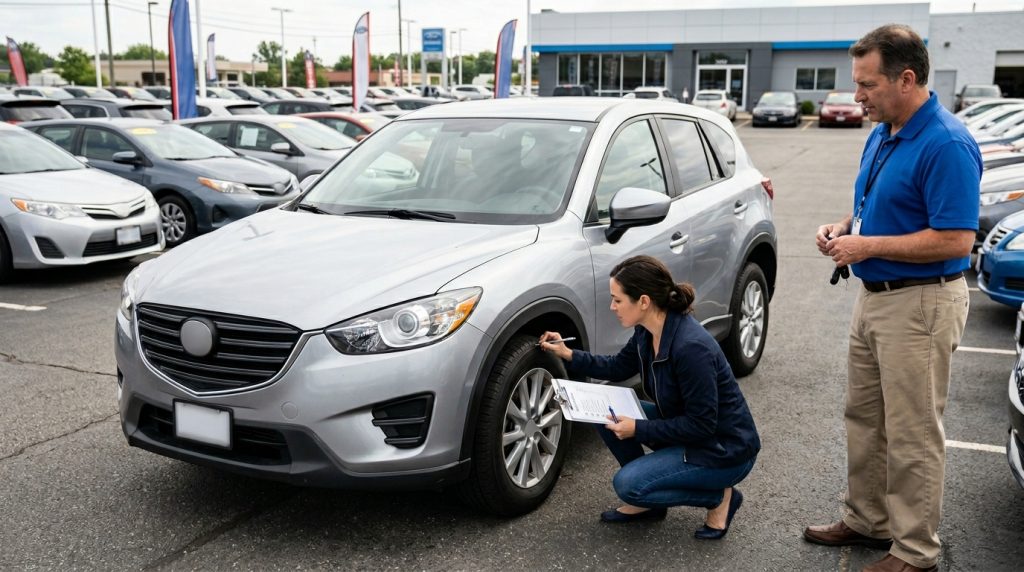
Buying a used car can be a smart way to save money, but it can also become expensive if you miss important warning signs. A vehicle may look clean in photos, but hidden problems can appear after payment. That is why using a used car buying checklist is one of the best ways to protect your money before making a final decision.
A good checklist helps you slow down, inspect the car carefully, ask better questions, and avoid emotional buying. It can also help you compare several vehicles more fairly instead of choosing only based on price or appearance.
In this guide, you will find a practical used car buying checklist for 2026. It covers vehicle history, title status, mileage, tires, brakes, engine condition, interior features, test drive quality, documents, and final payment steps.
Why a Used Car Buying Checklist Matters
A used car buying checklist matters because used cars come with different histories. Some were carefully maintained by responsible owners, while others may have accident damage, missing records, mechanical issues, or title problems.
Without a checklist, buyers often focus only on the exterior, mileage, or monthly payment. However, a cheap car is not always a good deal if it needs major repairs soon after purchase. Problems with the engine, transmission, brakes, suspension, or electrical system can cost far more than expected.
A checklist gives you a clear process. It helps you inspect the car step by step and avoid missing details when you are excited or under pressure from the seller.
If you want a deeper inspection guide, review the things to check before buying a used car before making your final decision.
1. Check the Vehicle History Report
The first step in any used car buying checklist is checking the vehicle history report. This report can show accident history, title status, mileage records, previous ownership, and sometimes service history.
Look for warning signs such as:
- Salvage or rebuilt title
- Flood damage
- Major accident history
- Odometer issues
- Multiple ownership changes
- Theft records
- Inconsistent mileage
A clean report does not guarantee the car is perfect, but it gives you useful information. If the seller refuses to provide the VIN or vehicle history, that is a serious warning sign.
Before buying, you can use CARFAX vehicle history reports to review ownership history, reported accidents, title issues, mileage records, and other details that may help reveal hidden problems.
2. Verify the Title and Ownership
Before paying for a used car, confirm that the title is clear and that the seller has the legal right to sell the vehicle. The name on the title should match the seller unless there is a valid legal explanation.
Check the title for:
- Owner name
- VIN
- Vehicle make and model
- Title brand
- Lien information
- Signature requirements
Be careful with missing titles, title jumping, salvage titles, or sellers who promise to send paperwork later. Title problems can delay registration and may create legal issues after purchase.
3. Match the VIN on the Car and Documents
The VIN should match everywhere. Compare the VIN on the dashboard, driver’s door frame, title, registration, insurance documents, and vehicle history report.
If the VIN does not match exactly, do not ignore it. A mismatch may be caused by a paperwork mistake, but it can also signal fraud, theft, or title problems.
VIN verification is one of the simplest but most important parts of a used car buying checklist.
4. Review Mileage and Service Records
Mileage matters, but it should not be judged alone. A high-mileage car with strong service records may be better than a low-mileage car with poor maintenance.
Ask for service records showing:
- Oil changes
- Tire rotations
- Brake service
- Battery replacement
- Fluid changes
- Major repairs
- Recall work
- Inspection reports
If the seller has no records, be more cautious. Missing records do not always mean the car is bad, but they make a mechanic inspection more important.
5. Inspect the Exterior Condition
Walk around the car slowly and inspect the body. Do this in daylight if possible. Look for signs of damage, rust, poor repair work, or accident history.
Check:
- Paint consistency
- Dents and scratches
- Rust spots
- Panel gaps
- Bumpers
- Headlights and taillights
- Windshield cracks
- Door alignment
- Trunk and hood fit
Mismatched paint, uneven gaps, or panels that do not line up may suggest previous body repairs. Rust can also become expensive if it spreads.
6. Check Tires and Wheels
Tires can reveal a lot about the condition of a used car. Uneven tire wear may point to alignment, suspension, or tire rotation problems.
Inspect:
- Tread depth
- Uneven wear
- Cracks
- Bulges
- Sidewall damage
- Matching tire sizes
- Wheel damage
- Spare tire condition
If the tires need replacement soon, include that cost in your negotiation. Tires are important for safety, braking, fuel economy, and handling.
7. Look Under the Hood
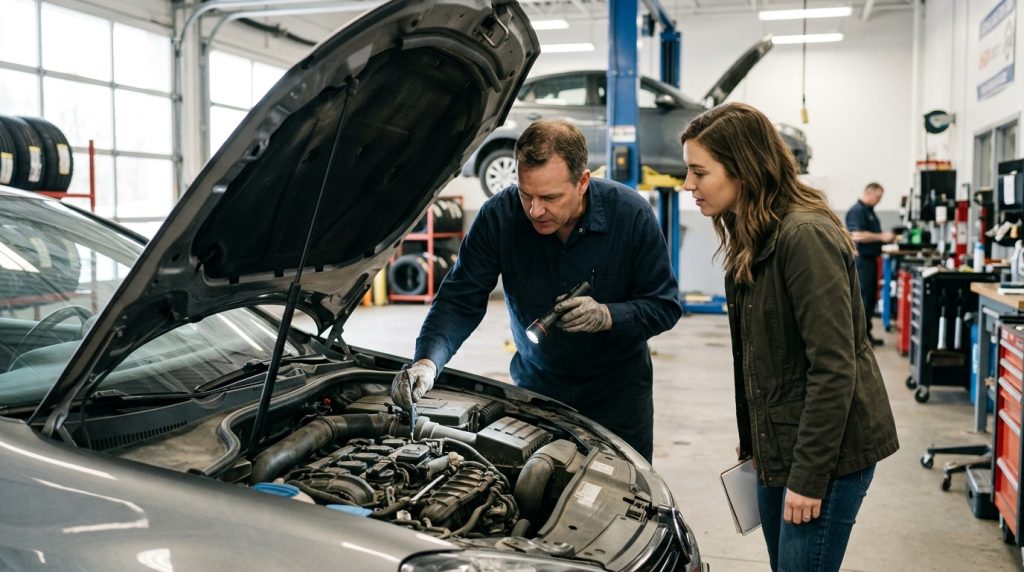
The engine area should be inspected carefully before buying. You do not need to be a mechanic to spot some basic warning signs.
Look for:
- Oil leaks
- Coolant leaks
- Cracked hoses
- Worn belts
- Corrosion
- Burning smells
- Loose parts
- Low fluid levels
- Dirty or neglected engine bay
Start the engine and listen. It should start smoothly without knocking, grinding, or heavy shaking. Watch for smoke from the exhaust, because blue, white, or black smoke may indicate mechanical problems.
8. Check Brakes and Suspension
Brakes and suspension affect both safety and comfort. During inspection and test drive, pay close attention to how the car stops and handles.
Warning signs include:
- Squeaking brakes
- Grinding noise
- Vibration when braking
- Soft brake pedal
- Car pulling to one side
- Clunking over bumps
- Uneven tire wear
- Excessive bouncing
Brake repairs can become expensive if worn pads damage rotors or calipers. Suspension issues can also affect tire life and handling.
9. Test Interior Features and Electronics
Do not assume everything works just because the car looks clean. Test all interior features before paying.
Check:
- Air conditioning
- Heating
- Power windows
- Door locks
- Seat adjustments
- Infotainment system
- Backup camera
- Wipers
- Horn
- Interior lights
- Charging ports
- Dashboard controls
Electrical problems can be frustrating and expensive to diagnose. A complete used car buying checklist should always include interior and electronics testing.
10. Take a Proper Test Drive
A test drive is one of the most important steps before buying a used car. Photos and seller descriptions cannot show how the vehicle performs on the road.
During the test drive, check:
- Acceleration
- Braking
- Steering
- Transmission shifting
- Suspension comfort
- Road noise
- Engine temperature
- Warning lights
- Parking ease
- Visibility
Drive on different roads if possible. Try slow streets, turns, braking, parking, and highway speeds. If the seller refuses a test drive, consider it a warning sign.
11. Get a Pre-Purchase Inspection
Even if the car looks good, a professional inspection can reveal hidden issues. A trusted mechanic can check areas most buyers miss.
A mechanic may inspect:
- Engine condition
- Transmission
- Brakes
- Suspension
- Leaks
- Frame damage
- Tires
- Fluids
- Belts and hoses
- Diagnostic codes
A pre-purchase inspection costs money, but it can save much more by helping you avoid a bad car. It can also give you stronger negotiation power.
12. Review the Final Price Before Paying
Before you pay, review the total cost carefully. Do not focus only on the sale price. Think about taxes, registration, insurance, repairs, and maintenance after purchase.
Before payment, confirm:
- Final sale price
- Included fees
- Title status
- Bill of sale
- Payment method
- Registration requirements
- Repair needs
- Insurance cost
- Any written agreements
Never rush the final step. If something feels unclear, ask questions before paying. A trustworthy seller should allow you to review the details calmly.
Common Used Car Buying Mistakes to Avoid
Many buyers make mistakes because they get excited about a good-looking car or a low price.
Avoid these common mistakes:
- Buying without a vehicle history report
- Skipping the test drive
- Ignoring title problems
- Not checking the VIN
- Trusting the seller too quickly
- Forgetting repair costs
- Ignoring warning lights
- Skipping mechanic inspection
- Buying under pressure
- Not comparing similar cars
The goal is not to find the cheapest car. The goal is to find a reliable used car that fits your budget and does not create surprise expenses.
What to Bring When Inspecting a Used Car
Before meeting the seller, bring a few basic items to help with inspection.
Useful items include:
- Phone flashlight
- Tire pressure gauge
- Notepad
- Checklist
- Driver’s license
- Insurance quote information
- Mechanic contact
- Vehicle history report
- Payment plan
- Someone you trust
Having a prepared used car buying checklist can help you stay focused and confident during the inspection.
FAQ About Used Car Buying Checklist
What should be on a used car buying checklist?
A good used car buying checklist should include vehicle history, title, VIN, mileage, service records, exterior, tires, engine, brakes, interior, test drive, mechanic inspection, and final price review.
Should I always get a mechanic inspection before buying?
Yes, it is strongly recommended. A mechanic can find hidden problems that may not be obvious during a normal inspection or test drive.
What is the biggest warning sign when buying a used car?
Major warning signs include salvage title, mismatched VIN, flood damage, warning lights, seller pressure, missing paperwork, or refusal to allow inspection.
Is high mileage bad on a used car?
Not always. Maintenance history matters more than mileage alone. A well-maintained high-mileage car may be better than a neglected low-mileage car.
Should I buy a used car without service records?
It is riskier. If service records are missing, you should get a professional inspection and be more cautious before buying.
What should I check before paying for a used car?
Before paying, check the title, VIN, bill of sale, final price, seller identity, vehicle condition, insurance cost, and registration requirements.
Conclusion
A used car buying checklist can help you make a smarter, safer, and more confident purchase. Buying used can save money, but only if you inspect the vehicle carefully and avoid hidden problems.
Before paying, check the vehicle history, title, VIN, mileage, service records, exterior, tires, engine, brakes, interior, and test drive performance. If possible, get a professional pre-purchase inspection.
Do not let a seller pressure you into a fast decision. A reliable used car is worth the extra time and attention. With the right used car buying checklist, you can protect your budget, reduce repair risks, and choose a vehicle that fits your needs.
