

7 Essential Car Documents Every Driver Should Understand in 2026
Owning a car is not only about driving, fueling, and maintaining it. Every driver also needs to understand the paperwork that proves ownership, insurance, registration, service history, and legal responsibility. These essential car documents can protect you when buying, selling, insuring, registering, or repairing a vehicle.
Many first-time car owners focus on the car itself and forget the documents that come with it. However, missing or incorrect paperwork can create serious problems. You may face registration delays, insurance issues, ownership disputes, repair confusion, or trouble selling the car later.
In this guide, we will explain the 7 essential car documents every driver should understand in 2026. Whether you are buying your first car, purchasing a used vehicle, or simply organizing your records, these documents can help you stay prepared and avoid costly mistakes.
If you are buying your first vehicle, our guide on how to choose your first car can help you understand budget, safety, reliability, and daily driving needs before reviewing the paperwork.
Why Essential Car Documents Matter
Understanding essential car documents matters because they help prove important facts about your vehicle. They show who owns the car, whether it is legally registered, whether it is insured, and how it has been maintained over time.
If you are buying a car, documents can help you confirm that the seller has the right to sell it. If you are pulled over, registration and insurance documents may be required. If you file an insurance claim, sell the vehicle, or apply for financing, paperwork becomes even more important.
Good documentation also helps protect the value of your car. A vehicle with clear title records, service history, and proper paperwork is usually easier to sell than one with missing or confusing documents.
1. Vehicle Title
The vehicle title is one of the most important essential car documents because it proves legal ownership. It shows who owns the vehicle and may also include information such as the VIN, make, model, year, and title status.
When buying a used car, always check the title carefully. The seller’s name should match the person selling the vehicle, unless there is a valid legal reason. The VIN on the title should also match the VIN on the car.
Watch for title brands such as salvage, rebuilt, flood, or lemon. These title brands may indicate past damage or legal issues. A branded title does not always mean the car is unusable, but it should make you more careful.
Never buy a car if the title is missing, unclear, or suspicious. A clean and accurate title helps protect you from ownership problems later.
2. Vehicle Registration
Vehicle registration proves that the car is officially registered with the proper authority in your area. Registration rules vary by location, but most drivers need valid registration to legally drive on public roads.
Registration documents usually include:
- Vehicle owner information
- License plate number
- VIN
- Vehicle make and model
- Registration expiration date
- State or local registration details
You may need registration paperwork when renewing tags, selling the car, updating insurance, or proving that the vehicle is legally allowed on the road.
Among the essential car documents, registration is one you should keep current. Expired registration can lead to fines, penalties, or legal issues depending on local rules.
3. Proof of Insurance
Proof of insurance is another document every driver should understand. It shows that your vehicle has active insurance coverage. In many places, drivers are required to carry proof of insurance while driving.
Proof of insurance may include:
- Insurance company name
- Policy number
- Covered vehicle
- Coverage dates
- Driver or policyholder name
- Contact information for claims
Insurance documents are important after accidents, traffic stops, registration renewals, and vehicle financing. If you cannot show valid insurance when required, you may face fines or other penalties.
Before buying a car, it is smart to get insurance quotes and understand what coverage you need. Insurance cost is also an important part of the total cost of ownership.
4. Vehicle Identification Number Records
The Vehicle Identification Number, or VIN, is a unique code assigned to your car. While the VIN itself is on the vehicle, it also appears on many essential car documents, including the title, registration, insurance card, service records, and loan documents.
The VIN helps identify the exact vehicle. It can be used to check recalls, title status, accident history, theft records, service history, and insurance details.
When reviewing paperwork, always make sure the VIN matches across all documents. If the VIN on the title does not match the VIN on the dashboard or door frame, do not ignore it. This may indicate a paperwork mistake, fraud, theft issue, or title problem.
For used car buyers, VIN verification is one of the smartest steps before payment.
Drivers can also use the NHTSA recall lookup tool to check whether a vehicle has an open safety recall by entering the VIN.
5. Bill of Sale
A bill of sale is a document that records the sale of a vehicle between a buyer and a seller. It is especially important in private-party transactions.
A bill of sale may include:
- Buyer’s name
- Seller’s name
- Vehicle description
- VIN
- Sale price
- Sale date
- Payment method
- Signatures
- Any special terms of sale
The bill of sale helps prove that the transaction happened. It can protect both the buyer and the seller if questions come up later.
Even if your area does not always require a bill of sale, it is still a good document to keep. It creates a written record of the purchase and can help with registration, taxes, or ownership transfer.
6. Service and Maintenance Records
Service records are among the most useful essential car documents for long-term ownership. These records show how the car has been maintained over time.
Useful maintenance records may include:
- Oil changes
- Tire rotations
- Brake service
- Battery replacement
- Fluid changes
- Transmission service
- Major repairs
- Inspection reports
- Recall repairs
- Warranty work
Good service records can help you understand the condition of the vehicle. They can also increase buyer confidence if you sell the car later.
For used car buyers, service records are extremely valuable. A car with consistent maintenance history is often a safer choice than a car with no records, even if the mileage is higher.
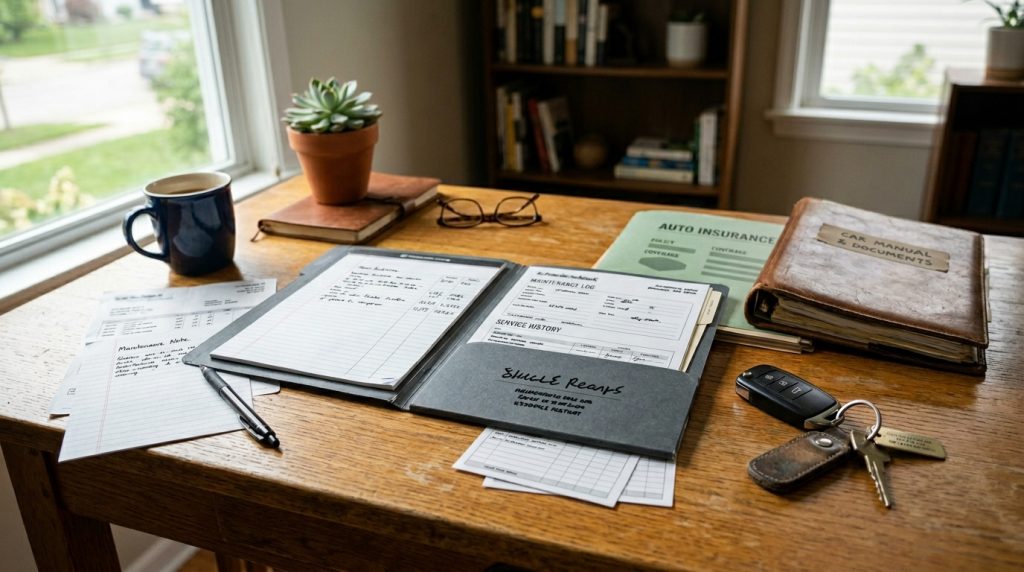
If you own a car, keep receipts and service documents in one organized folder or digital file.
7. Loan, Lease, and Warranty Documents
If you finance or lease a car, loan and lease documents are very important. These papers explain your payment terms, interest rate, loan length, fees, and legal responsibilities.
Loan documents may include:
- Total amount financed
- Monthly payment
- Interest rate
- Loan term
- Lender information
- Late payment rules
- Payoff amount details
Lease documents may include mileage limits, wear-and-tear rules, end-of-lease fees, and return conditions.
Warranty documents are also important. A warranty may cover certain repairs for a specific time or mileage. However, not every repair is covered. You should read the warranty terms carefully so you know what is included and what is excluded.
These essential car documents can prevent confusion about payments, repair coverage, and ownership responsibilities.
How to Organize Your Car Documents
Keeping your car paperwork organized can save time and stress. You do not want to search for important documents during an emergency, sale, insurance claim, or registration renewal.
A good system may include:
- A physical folder at home
- Digital copies stored securely
- Important documents saved as PDFs
- Receipts organized by date
- Insurance card kept in the vehicle if required
- Registration kept where local law allows
- Service records stored together
Do not keep the vehicle title in the car unless required for a specific task. If the car is stolen, having the title inside the vehicle can create more problems.
Good organization makes car ownership easier and safer.
Common Mistakes Drivers Make With Car Documents
Many drivers make paperwork mistakes that can create problems later.
Avoid these common mistakes:
- Losing the vehicle title
- Forgetting to renew registration
- Driving without proof of insurance
- Not checking the VIN on documents
- Throwing away service receipts
- Ignoring warranty details
- Not keeping a bill of sale
- Signing documents without reading them
- Buying a used car with missing paperwork
- Keeping no digital backup
Paperwork may seem boring, but it protects your money and legal rights.
What Documents Should You Keep in the Car?
The documents you should keep in the vehicle depend on local laws, but many drivers keep proof of insurance and registration in the car. Some drivers also keep emergency contact information, roadside assistance details, and a copy of recent inspection paperwork.
However, you should be careful about keeping sensitive documents inside the vehicle. Avoid leaving the original title, loan papers, or personal financial documents in the car.
A simple rule is this: keep driving-related documents in the vehicle, but keep ownership and financial documents safely at home.
FAQ About Essential Car Documents
What are the most essential car documents?
The most essential car documents include the vehicle title, registration, proof of insurance, VIN records, bill of sale, service records, and loan or warranty documents.
Should I keep my vehicle title in the car?
Usually, no. The vehicle title should be stored safely at home or in another secure location. Keeping it in the car can be risky if the vehicle is stolen.
Why is the VIN important on car documents?
The VIN identifies the exact vehicle. It should match across the title, registration, insurance, service records, and the car itself.
Do I need service records when selling a car?
Service records are not always legally required, but they can increase buyer confidence and may help show that the car was properly maintained.
What document proves I own my car?
The vehicle title is the main document that proves ownership. If the car is financed, the lender may hold the title until the loan is paid off.
What documents do I need when buying a used car?
You should review the title, registration, bill of sale, VIN records, vehicle history report, service records, and any warranty or loan documents.
Conclusion
Understanding essential car documents is an important part of being a responsible driver and car owner. These documents help prove ownership, confirm registration, verify insurance, track maintenance, protect against fraud, and support future resale.
Before buying, selling, or registering a vehicle, take time to review the paperwork carefully. Make sure the VIN matches, the title is clear, the insurance is active, and the service records are organized.
A car is a major investment, and the paperwork behind it matters. When you understand the essential car documents every driver needs, you can protect your vehicle, your money, and your peace of mind.
