
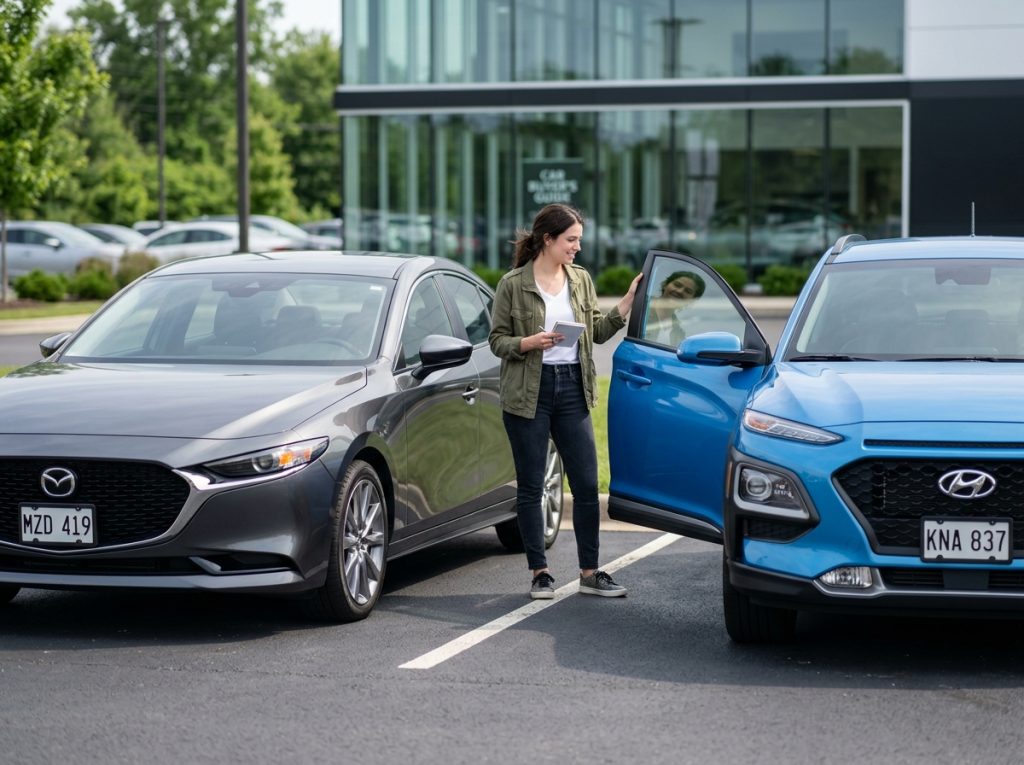
Choosing between a sedan and an SUV is one of the most common decisions car buyers face. Both vehicle types can be practical, comfortable, and reliable, but they serve different needs. When comparing sedan vs SUV options, you should think about your daily driving habits, budget, fuel costs, passenger space, cargo needs, safety, parking, and long-term ownership expenses.
A sedan is usually lower, lighter, more fuel-efficient, and easier to drive in cities. An SUV usually offers more cargo space, a higher driving position, more ground clearance, and a stronger family-friendly image.
There is no single right answer for everyone. The best choice depends on how you use your car every day. In this guide, we will compare sedan vs SUV differences in a practical way so you can decide which one fits your lifestyle best.
If you are still comparing your first vehicle options, our complete guide on how to choose your first car can help you understand budget, safety, reliability, and daily driving needs before making a final decision.
Sedan vs SUV: The Main Difference
The main difference between a sedan and an SUV is design. A sedan usually has a lower body, separate trunk, and traditional four-door layout. An SUV has a taller body, larger cargo area, higher seating position, and often more ground clearance.
Sedans are often better for drivers who want comfort, fuel economy, easy parking, and lower ownership costs. SUVs are often better for families, road trips, cargo space, rough roads, and drivers who prefer sitting higher.
When comparing sedan vs SUV, do not choose based only on appearance. Think about how often you drive, where you drive, how many passengers you carry, and how much space you really need.
1. Daily Driving Comfort
Comfort is one of the most important factors in the sedan vs SUV decision. Both can be comfortable, but they feel different on the road.
Sedans usually have a lower center of gravity, which can make them feel smoother and more stable during turns. Many sedans offer a quiet ride, comfortable seats, and easy handling. For daily commuting, city driving, and highway travel, a sedan can feel relaxed and predictable.
SUVs usually provide a higher seating position. Many drivers like this because it gives them a better view of the road. SUVs may also feel more spacious inside, especially for taller passengers.
However, some SUVs may feel less smooth than sedans because of their higher body and heavier weight. Larger SUVs may also feel harder to maneuver in tight city spaces.
If your daily driving is mostly commuting, parking, and normal roads, a sedan may be enough. If you prefer more height, visibility, and cabin space, an SUV may feel better.
2. Fuel Economy
Fuel economy is a major part of the sedan vs SUV comparison. In general, sedans are usually more fuel-efficient than SUVs because they are lighter, lower, and more aerodynamic.
A fuel-efficient sedan can save money every month, especially if you drive long distances or commute daily. Lower fuel costs can make a big difference over several years.
SUVs are usually heavier and may use more fuel. However, modern compact SUVs and hybrid SUVs have improved a lot. Some smaller SUVs now offer fuel economy that is close to sedans.
Still, if fuel savings are your top priority, a sedan often has an advantage. If you need more space and are willing to pay slightly more for fuel, an SUV may still be worth considering.
3. Passenger Space
Passenger space depends on the specific model, but SUVs usually offer more headroom and a more open cabin feel. This can be helpful for families, taller passengers, or people who often travel with friends.
Sedans can still be very comfortable, especially midsize sedans. Many sedans offer good rear-seat legroom and a quiet cabin. However, the lower roofline may make entry and exit less convenient for some passengers.
SUVs usually make it easier to get in and out because of their higher seating position. Parents may also find it easier to place children in car seats in an SUV.
When choosing sedan vs SUV, think about who will sit in the car most often. If you usually drive alone or with one passenger, a sedan may be more practical. If you often carry family members, children, or taller passengers, an SUV may be more comfortable.
4. Cargo Space
Cargo space is one of the biggest reasons many buyers choose an SUV. SUVs usually have a large rear cargo area, and the back seats can often fold down to create more space.
This makes SUVs useful for:
- Grocery shopping
- Family trips
- Sports equipment
- Baby strollers
- Camping gear
- Pets
- Large bags or boxes
Sedans have a separate trunk, which can be secure and practical for everyday use. A sedan trunk is usually enough for groceries, luggage, work bags, and normal daily items. However, it may be harder to carry tall or bulky objects.
If cargo space is a major priority, the sedan vs SUV choice may lean toward an SUV. If you only need normal trunk space, a sedan may be enough.

5. Parking and City Driving
For city drivers, parking and maneuverability matter a lot. Sedans are usually easier to park because they are lower and often narrower than SUVs. They may also feel easier to control in tight spaces.
Compact sedans are especially practical for crowded streets, parking garages, and small driveways. They usually have better visibility around corners and may be less stressful to drive in heavy traffic.
SUVs can be harder to park, especially larger models. Their taller body can make them feel bigger than they are. However, many modern SUVs come with parking sensors, rearview cameras, and driver assistance features that make parking easier.
If you drive mostly in the city, a sedan may be simpler and cheaper to live with. If you live in an area with wider roads, larger parking spaces, or rougher conditions, an SUV can still be practical.
6. Safety and Road Visibility
Safety is important in any car buying decision. In the sedan vs SUV debate, SUVs often feel safer to many drivers because they are larger and provide a higher view of the road.
The higher seating position in an SUV can help drivers see traffic more clearly. SUVs may also perform better on rough roads or in bad weather because of their ground clearance. Some SUVs offer all-wheel drive, which can be helpful in rain, snow, or uneven roads.
Sedans can also be very safe. Many sedans have excellent crash-test ratings, strong braking performance, stability control, airbags, and advanced driver assistance features.
The safest choice is not simply sedan or SUV. It depends on the specific model, safety ratings, tires, braking system, and driver behavior. Always compare safety features and crash-test results before buying.
Before choosing between a sedan and an SUV, you can compare official vehicle safety ratings through NHTSA 5-Star Safety Ratings or review crashworthiness and crash avoidance ratings from IIHS.
7. Ownership Cost
The total cost of ownership is one of the most important parts of choosing sedan vs SUV. Sedans are often cheaper to buy, cheaper to insure, cheaper to fuel, and cheaper to maintain.
SUVs may cost more because they are larger, heavier, and may have more expensive tires, brakes, and parts. Insurance may also be higher depending on the model.
However, SUVs can offer better practicality for families and may have strong resale value in some markets. If you truly need the extra space, the higher cost may be reasonable.
Before deciding, compare:
- Purchase price
- Insurance cost
- Fuel economy
- Maintenance cost
- Tire replacement cost
- Repair cost
- Resale value
- Financing cost
A vehicle that fits your lifestyle and budget is better than one that only looks attractive.
When a Sedan May Be Better
A sedan may be the better choice if you want a practical, efficient, and easy-to-drive daily car.
Choose a sedan if:
- You drive mostly in the city
- You want better fuel economy
- You want lower ownership costs
- You do not need a large cargo area
- You prefer smooth handling
- You usually drive alone or with one passenger
- You want easier parking
- You are buying your first car
For many daily drivers, a sedan offers the right balance of comfort, cost, and efficiency.
When an SUV May Be Better
An SUV may be the better choice if you need more space, visibility, and flexibility.
Choose an SUV if:
- You have a family
- You carry passengers often
- You need more cargo space
- You travel often
- You drive on rough roads
- You want a higher seating position
- You carry pets, strollers, or sports gear
- You prefer a more spacious cabin
For families and drivers with active lifestyles, an SUV can be more practical than a sedan.
Compact SUV vs Sedan
Many buyers are not choosing between a large SUV and a sedan. Instead, they are comparing a compact SUV with a sedan.
A compact SUV can offer some SUV benefits without being too large. It may provide higher seating, flexible cargo space, and easier entry and exit. However, it may still cost more than a sedan and use more fuel.
A sedan may feel smoother, more efficient, and more affordable. If you do not need the extra cargo height, a sedan can be a better value.
The best way to decide is to test drive both and compare real costs.
Common Mistakes to Avoid
When comparing sedan vs SUV, many buyers make decisions too quickly.
Avoid these mistakes:
- Buying an SUV only because it looks bigger
- Choosing a sedan without checking cargo needs
- Ignoring fuel costs
- Forgetting insurance costs
- Not test driving both options
- Buying more car than you need
- Ignoring parking space
- Choosing style over practicality
- Not comparing safety ratings
- Focusing only on monthly payment
A smart decision should be based on your real life, not just trends.
Final Verdict: Sedan vs SUV
So, which is better for daily driving? The answer depends on your lifestyle.
A sedan is usually better if you want lower costs, better fuel economy, easier parking, and smooth daily driving. It is a great choice for commuters, students, first-time buyers, and people who do not need a large cargo area.
An SUV is usually better if you need more space, higher seating, flexible cargo room, and more family-friendly practicality. It is a strong choice for parents, travelers, and drivers who carry passengers or gear often.
In the end, the sedan vs SUV decision is not about which vehicle type is always better. It is about which one fits your budget, driving habits, passengers, and daily needs.
FAQ About Sedan vs SUV
Is a sedan better than an SUV for daily driving?
A sedan can be better for daily driving if you want better fuel economy, easier parking, smoother handling, and lower ownership costs.
Is an SUV safer than a sedan?
An SUV may feel safer because of its size and higher seating position, but safety depends on the specific model, crash-test ratings, features, tires, and driver behavior.
Which is cheaper to own, a sedan or an SUV?
A sedan is usually cheaper to own because it often costs less to buy, insure, fuel, and maintain. However, costs vary by model.
Which is better for families, sedan or SUV?
An SUV is often better for families because it offers more cargo space, easier child seat access, and a more spacious cabin.
Should first-time buyers choose a sedan or SUV?
First-time buyers may prefer a sedan because it is usually easier to drive, cheaper to own, and simpler to park. However, a compact SUV can also be a good choice if more space is needed.
Does an SUV use more fuel than a sedan?
In many cases, yes. SUVs are usually heavier and less aerodynamic. However, compact SUVs and hybrid SUVs can offer improved fuel economy.
Conclusion
The sedan vs SUV choice depends on how you drive, where you live, who rides with you, and how much space you need. A sedan is usually more affordable, fuel-efficient, and easier to drive in the city. An SUV usually offers more cargo space, a higher seating position, and better flexibility for families or active lifestyles.
Before making your final decision, compare the full cost of ownership, not just the purchase price. Think about insurance, fuel, maintenance, parking, passenger space, and long-term value.
The best car is not always the biggest or the cheapest. The best car is the one that fits your daily life, supports your budget, and gives you confidence every time you drive.
